Olive Baboons (Papio anubis)
Baboons easily outnumbered chimps at Gombe. Even though the chimpanzees enjoyed celebrity status, the baboons commanded equal scientific scrutiny. Curt would later get his doctorate degree studying baboons in the Okavango Delta, Botswana, where he would quickly realize that baboons are every bit as intriguing behaviorally as the more celebrated chimpanzees.
Whereas baboons in much of Africa are targeted as prey by leopards and lions,1 the baboons at Gombe live in a relatively predator-free environment. Leopards were last seen at Gombe in 1975;2 lions, not since before Dr. Jane first arrived.3 The baboons still need to be wary of pythons — and also of chimpanzees.
During the fifty days, Figan made one unsuccessful attempt to catch a young baboon (Day 30). Between 1968 and 1970 however, the chimpanzees hunted and killed 12 young baboons during a period of heavy provisioning of bananas that drew large numbers of chimpanzees and baboons into close proximity around the feeding station.4 Since then, rates of predation by chimpanzees on baboons have dropped dramatically.
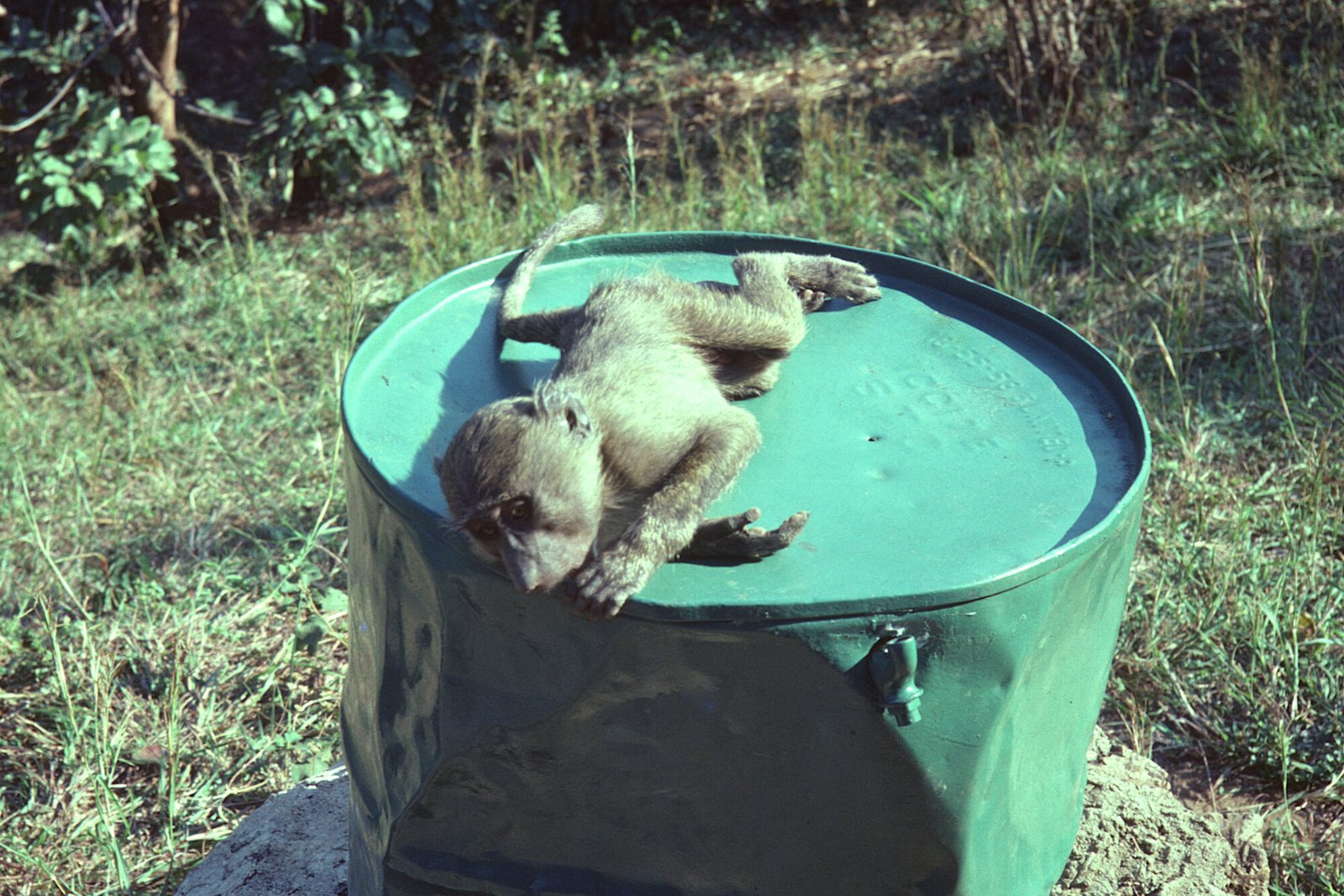
Two-year-old baboon lies on the drum in the Feeding Station. 
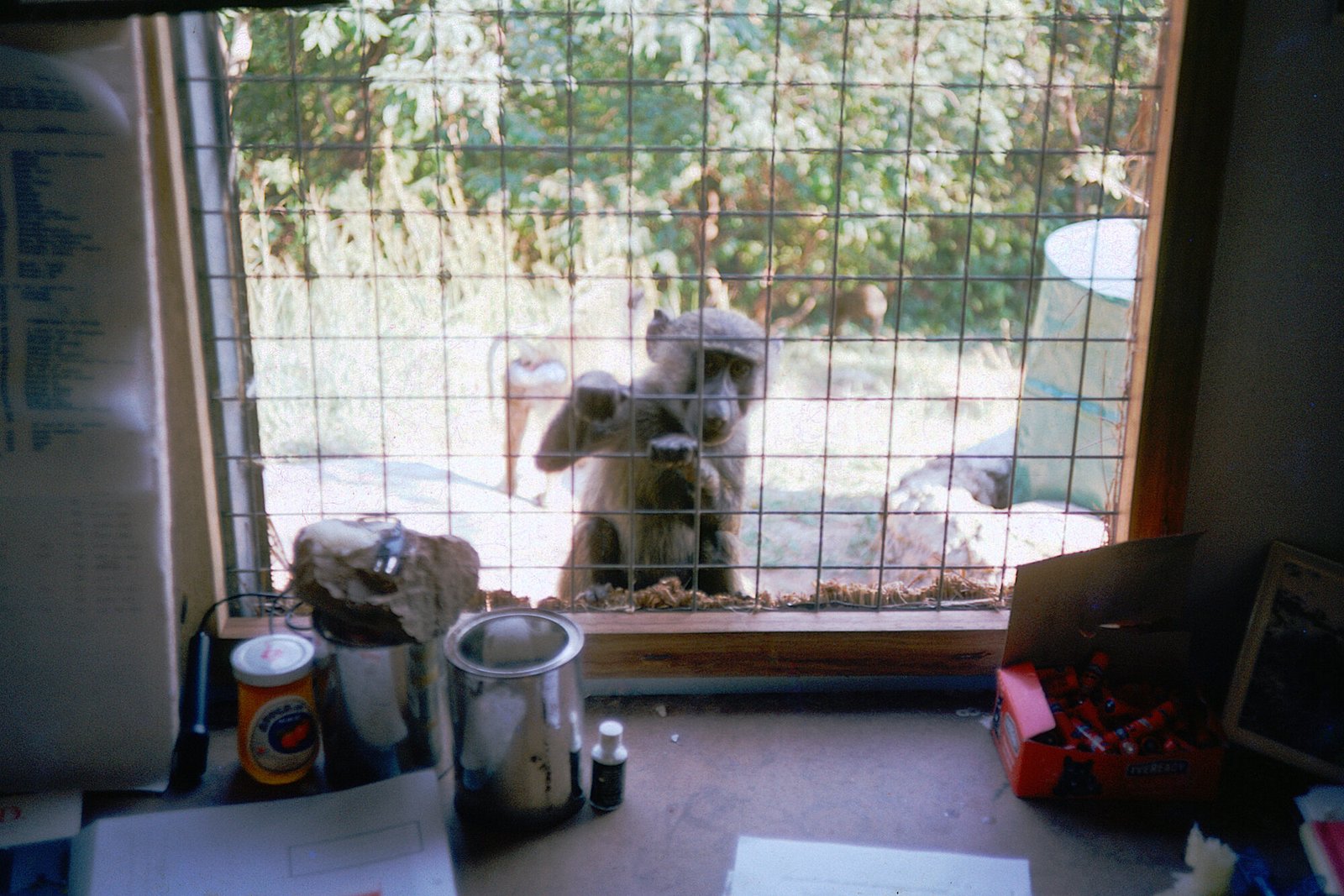
A curious youngster looks in at David’s desk in the main research building (aka Pan Palace) at the Feeding Station.
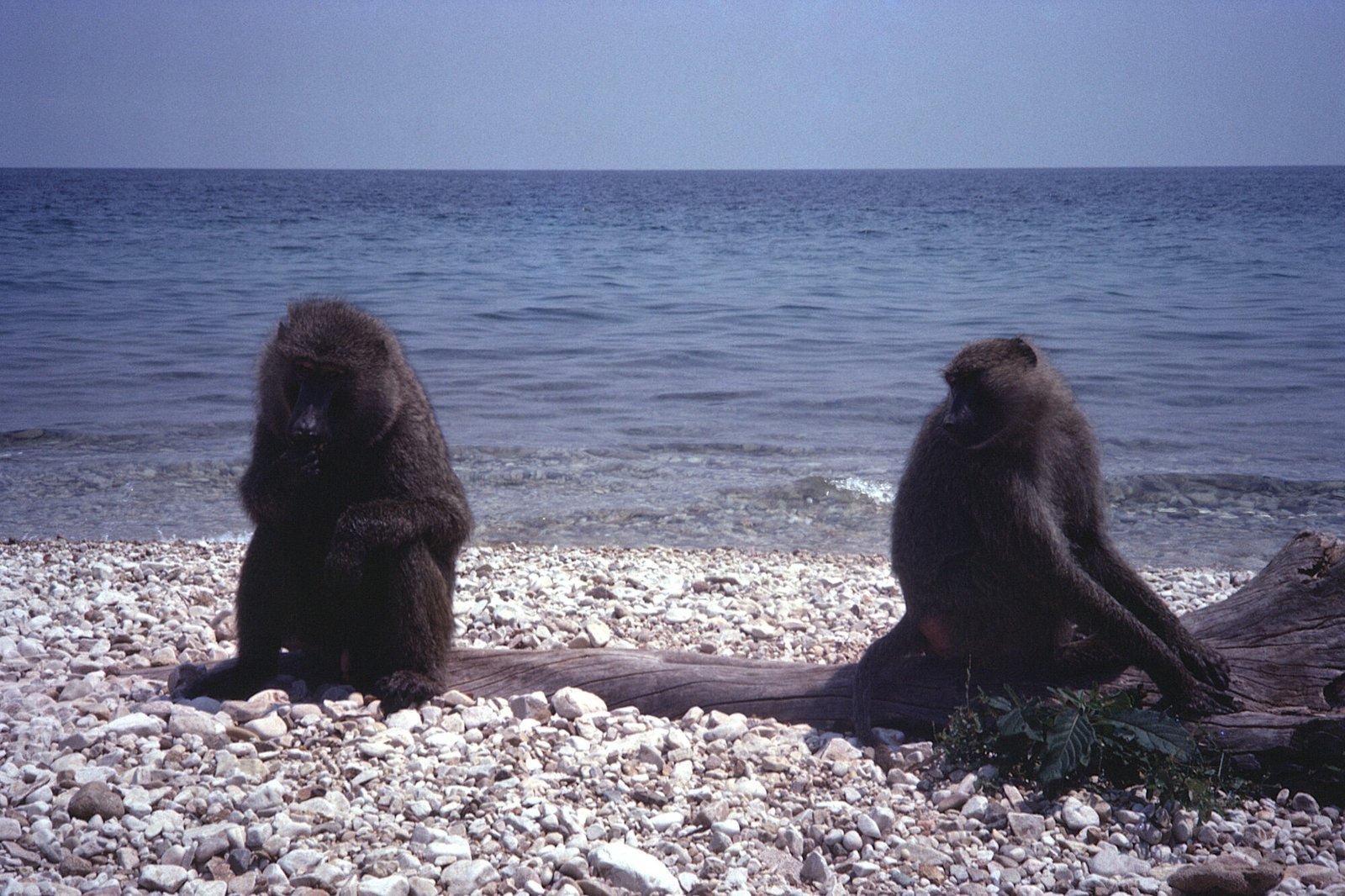
Adult male and female baboons on the beach.
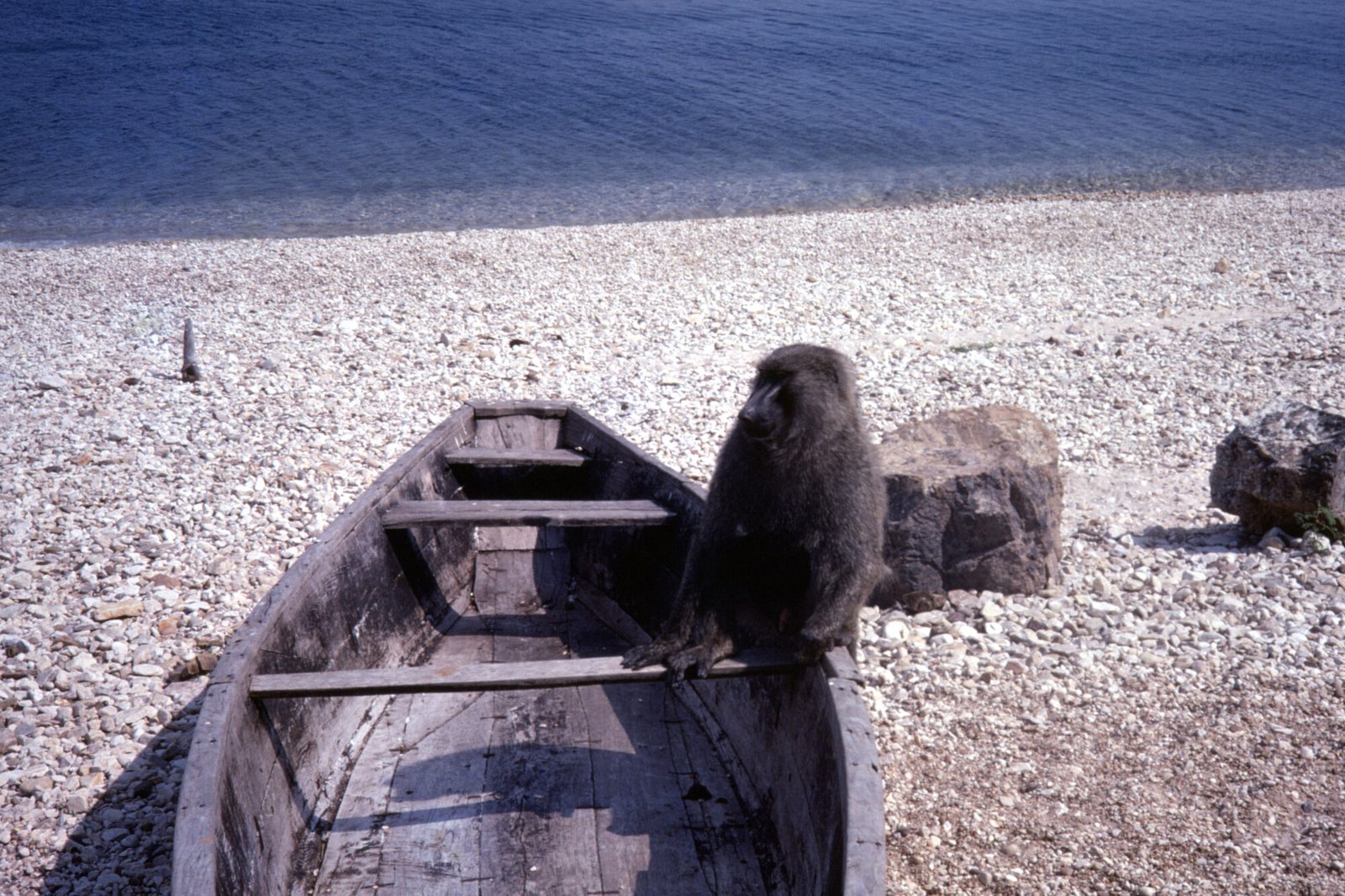
Adult male.
Bonus Photos from July, 2024
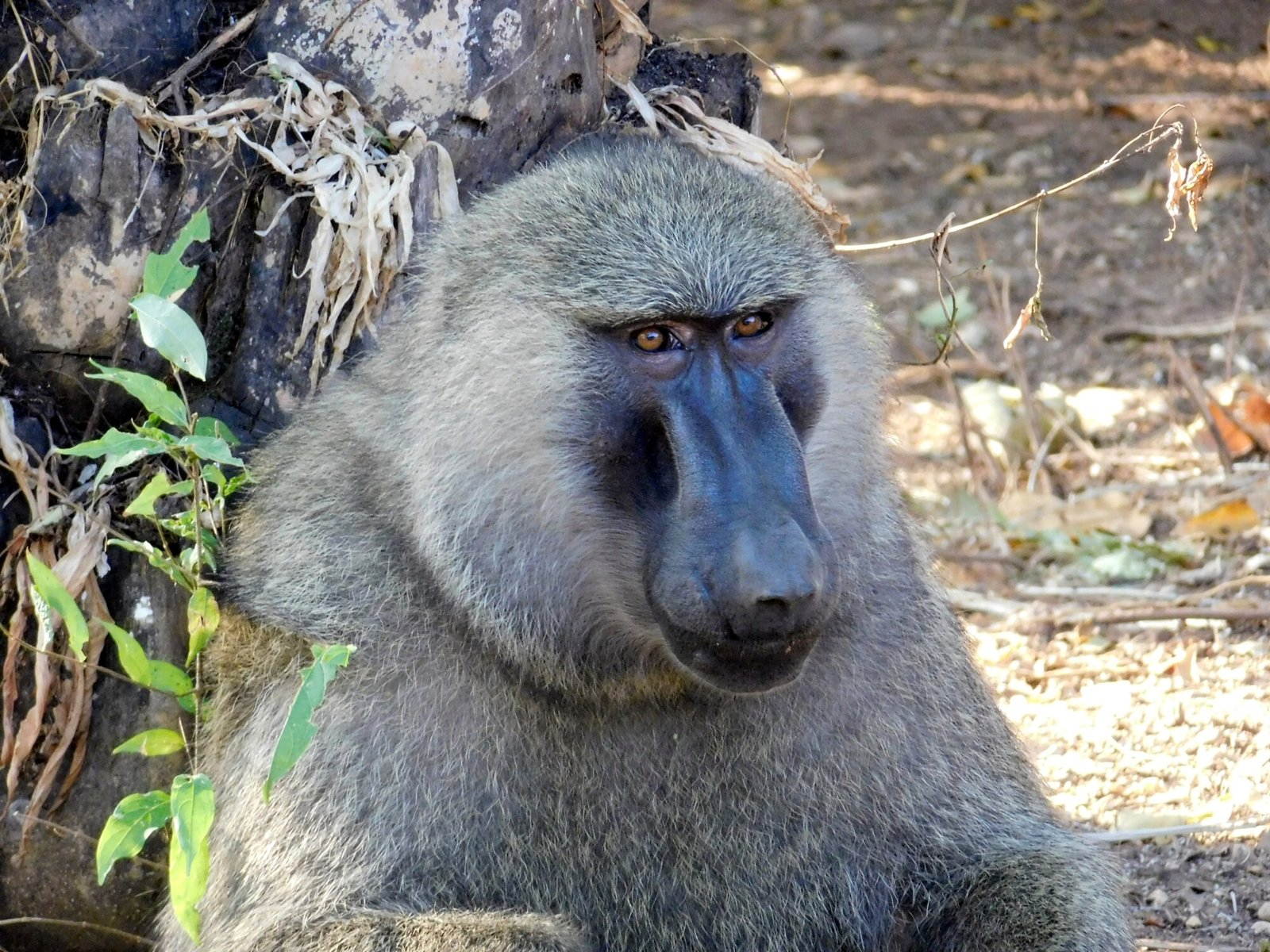
Adult male olive baboon in Mitumba Valley, Gombe National Park.
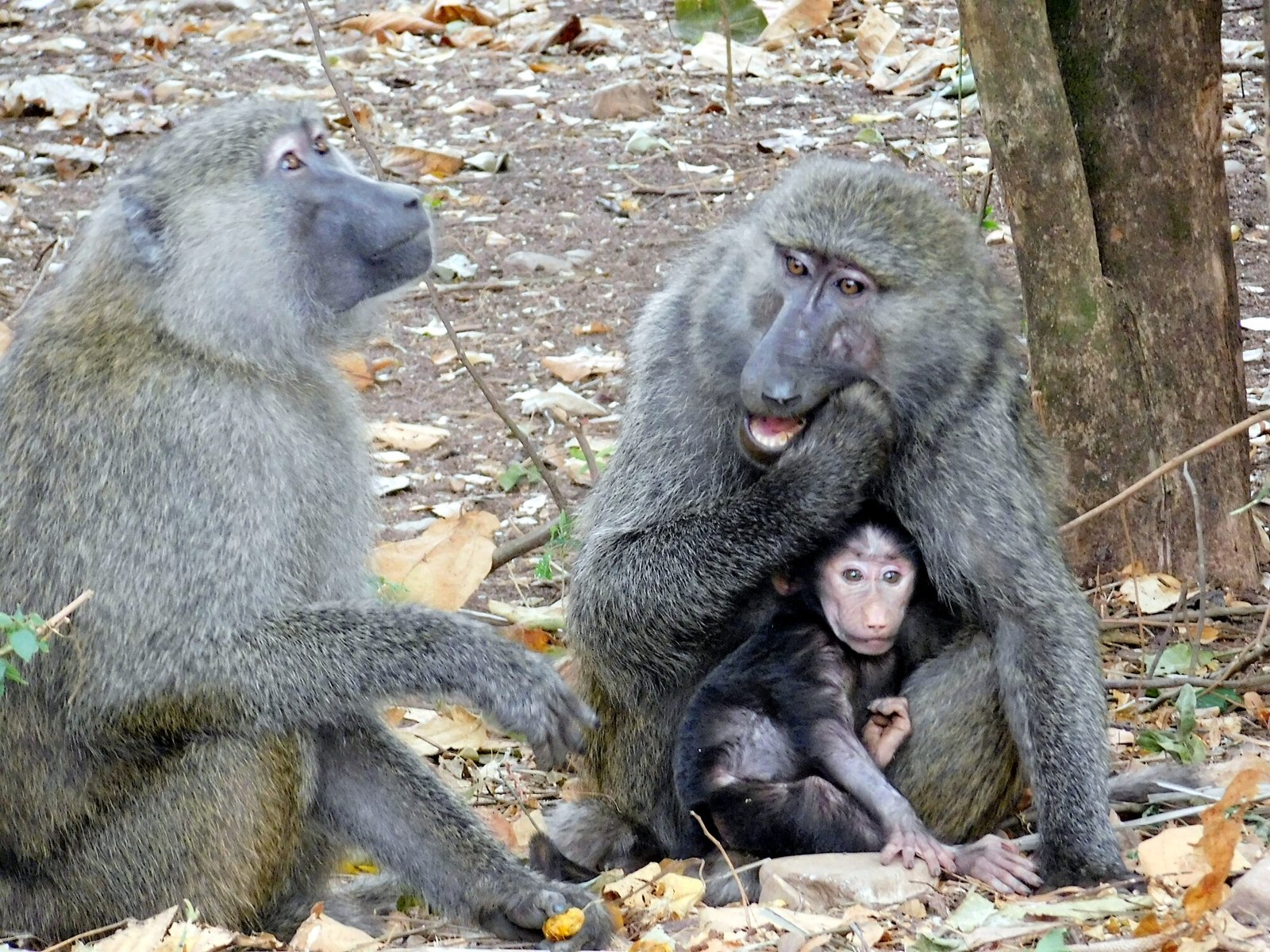
Two adult females and an infant in Mitumba Valley.
- Curt Busse. Leopard and Lion predation upon Chacma Baboons living in the Moremi Wildlife Reserve. Botswana Notes & Records (1980). ↩︎
- A. Pierce. “An Encounter between a Leopard and a Group of Chimpanzees at Gombe National Park.” Pan Africa News, December, 2009. ↩︎
- Lions were reported in the Bubango area—just east of Gombe—as recently as 1946 (M. Walsh, L. Said, B. Marwa, and K. Banister. “Fish and Fishing in the River Mungonya at Bubango, Kigoma District, Tanzania.” Lake Tanganyika Biodiversity Project, December, 1996. ↩︎
- Geza Teleki. The Predatory Behavior of Wild Chimpanzees (1973). ↩︎